Why Do Men Wear Pinky Rings? A Guide to History, Status, and Style
Curious why men wear pinky rings? Explore the rich history, symbolism, and modern style behind this powerful accessory, from royalty to pop culture icons.
Luis Cienfuegos
03/07/2025
Last modified: 3 de July de 2025
Table Of Contents
The glint of a ring on a man’s smallest finger often sparks curiosity. It’s a deliberate choice, a piece of jewelry set apart from the traditional wedding band. The question of why do men wear pinky rings is not a new one; it’s a query steeped in centuries of history, symbolism, and evolving style. Unlike other accessories, the pinky ring carries a unique weight, capable of telling a story of lineage, broadcasting success, or simply making a bold fashion statement. It’s an accessory that whispers of power, heritage, and personal identity.
This guide will journey through the rich tapestry of this adornment’s past, decode its many meanings, and offer insights for the modern man looking to adopt this timeless piece. From the signet seals of ancient Roman nobles to the statement pieces worn by today’s celebrities, we will explore the enduring allure of this distinctive jewelry.
A Journey Through Time: The History of Men’s Pinky Rings
To truly appreciate the significance of a man’s pinky ring, we must travel back through the annals of history. Its journey is not merely one of fashion but of function, power, and societal shifts. Long before it became a stylish accessory, this piece of jewelry served practical and symbolic purposes, cementing its place as a meaningful item across different cultures and eras. The evolution from a tool of authority to a badge of style reflects broader changes in masculinity and self-expression.
From Ancient Signets to Victorian Gentlemen
The story begins in antiquity. In ancient Rome, men of wealth and influence wore rings on their little fingers, often made of gold and adorned with precious stones, as a clear indicator of their social standing. The Roman naturalist Pliny the Elder noted that some men wore a single ring on this finger to signify the possession of an even more valuable signet ring, kept safe for sealing important documents. This practice of using a signet ring, derived from the Latin word signum meaning “sign,” involved pressing the engraved face into hot wax to authenticate a letter with a personal or family crest. This tradition continued through the Middle Ages and the Renaissance, where nobility used such rings as a badge of office, choosing the pinky because it was less likely to be damaged during daily activities.
The Victorian era saw the accessory’s popularity surge among the British aristocracy. Influenced by German tradition and popularized by Queen Victoria’s own sons, English gentlemen began wearing their family crest signet rings on their left pinky finger. These rings were treasured heirlooms, passed down through generations, serving as a constant and visible link to one’s noble heritage. This period solidified the ring’s association with lineage and established a tradition that continues in royal circles to this day.
The Roaring Twenties and the Rise of the Style-Conscious Man
As the world moved into the 20th century, the pinky ring began to shed some of its purely aristocratic connotations. The Roaring Twenties, an era of social liberation and stylistic experimentation, saw the accessory adopted by a new kind of man: the dandy, the entrepreneur, and the jazz musician. It became a symbol not just of inherited wealth, but of self-made success and a flair for fashion.
This period marked a significant shift where personal style began to take precedence over rigid tradition. Men started wearing these rings simply because they looked good, adding a touch of sophisticated rebellion to their attire. The accessory became part of the uniform for the well-dressed man, signaling that he was both successful and in tune with the modern world, a trend that would continue to grow throughout the century.
Today, a man’s pinky ring is a multifaceted accessory that embodies all its historical meanings while allowing for profound personal expression. It can still signify family heritage or professional achievement, but it has also been embraced as a pure fashion statement. Jewelers like David Yurman note that its perception has evolved as men have become more style-centric, viewing it as a way to show “a reverence for the past infused with a modern spirit of self-expression.”
The modern pinky ring is a testament to individuality. It can be a subtle minimalist band, a bold gemstone piece, or a classic signet engraved with a personal motif rather than a family crest. It serves as a personal talisman, a reminder of one’s journey, accomplishments, and unique identity in a world where self-expression is highly valued.
Having explored its historical path from a tool of the powerful to an accessory for the stylish, we can now delve deeper into the specific messages these rings convey.
Decoding the Message: What a Pinky Ring on a Man Symbolizes
Building on its rich history, a pinky ring worn by a man today is a potent symbol, communicating a range of messages from the overt to the subtle. It acts as a non-verbal cue, offering a glimpse into the wearer’s background, affiliations, or personal philosophy. The choice to place a ring on the smallest, most detached finger is an intentional one, laden with meaning that has been cultivated over thousands of years.
A Sign of Wealth and High Status
The oldest and most enduring meaning of this adornment is its connection to wealth and status. This dates back to ancient civilizations where precious metals and gems were a direct display of power. The Roman concept of wearing a more modest pinky ring to hint at greater, unseen wealth is a powerful example of this symbolism. It suggests a confidence so profound that there is no need for ostentatious display.
In the modern context, this symbolism persists. While not exclusively worn by the wealthy, a well-crafted ring, particularly one made of gold or platinum, can signify professional success and financial achievement. It is often adopted by men who have reached a certain pinnacle in their careers, worn as a personal badge of honor for their hard work and accomplishments.
Family Heritage and the Signet Ring Tradition
Perhaps the most classic interpretation is the signet ring worn as a connection to one’s lineage. Engraved with a family crest or coat of arms, these rings are powerful symbols of heritage and belonging. They are often passed down from one generation to the next, becoming tangible links to a family’s history and traditions.
This tradition is most famously upheld by the British royal family, with King Charles III rarely seen without his signet ring on his left pinky. However, one need not be royalty to embrace this meaning. Many men choose to wear signet rings with their family crests or even their own initials as a proud display of their roots and the values they represent.
Professional Affiliation and Fraternities
Beyond family, a pinky ring can also denote membership in a specific group or organization. Many university fraternities, professional associations, and exclusive clubs have their own rings that members wear as a sign of belonging and shared identity. For example, some engineers in North America wear an Iron Ring on their pinky finger as a symbol of their profession and its ethical obligations.
This use of the accessory transforms it into a symbol of community and commitment. It tells onlookers that the wearer is part of a collective, bound by common experiences, goals, or principles. The ring becomes a quiet identifier, recognizable to fellow members and intriguing to outsiders.
Marital Status: A Historical Perspective
While the fourth finger is now the universal standard for a wedding band in Western culture, this was not always the case. During the Victorian era, some men, influenced by German customs, wore their wedding rings on their left pinky finger. Interestingly, this practice was adopted by both married men and bachelors who had no intention of marrying, serving as a signal that they were not available or seeking a spouse.
Though this tradition has largely faded, it adds another fascinating layer to the ring’s history. It demonstrates the accessory’s versatility and how its meaning can shift dramatically based on cultural context and historical period, serving as a predecessor to modern relationship status indicators.
The Mafia Connection: Fact vs. Fiction
No discussion of men’s pinky rings is complete without addressing their portrayal in popular culture, particularly in connection with organized crime. Films like The Godfather and shows like The Sopranos have cemented the image of the mob boss with a flashy pinky ring. This mafia connection is not entirely fictional; figures like Al Capone were known to wear them. For these men, the rings were a symbol of power and loyalty to their “family.”
In this context, the ring also served a grimly practical purpose. It was understood that if the wearer met an untimely end, the valuable jewelry could be used to pay for funeral expenses. While this association is a powerful and enduring part of the ring’s mythology, it’s crucial to recognize it as a specific cultural trope rather than the universal meaning of the accessory.
The symbolism of a pinky ring is clearly complex, but does its placement on one hand versus the other add yet another dimension to its message?
Left Hand vs. Right Hand: Does Placement Change the Meaning?
After decoding the various symbols a pinky ring can represent, a natural question arises: does the hand it’s worn on matter? For many wearers, the choice is simply a matter of comfort or which hand is non-dominant. However, in traditional symbolism and some modern interpretations, the placement on the left or right hand can add another layer of nuance to the ring’s message.
To clarify these traditional interpretations, here is a breakdown of the symbolism associated with each hand:
Aspect
Right Hand (“Active” Hand)
Left Hand (“Mental” Hand)
Represents
Professional life, public sphere, action
Personal beliefs, inner world, character
Symbolizes
Achievements, graduation, professional orders
Family heritage, personal promises, identity
Focus
Outward-facing communication
Inward-facing connection to self
The Symbolism of the Right Pinky Finger
The right hand is often considered the “active” or “physical” hand. It’s the hand most people use for actions like writing, shaking hands, and performing tasks. Consequently, a ring worn on the right pinky is frequently associated with one’s professional life and how one interacts with the world. It can symbolize graduation from a university or membership in a professional order. Wearing a ring on this hand can be seen as a statement about one’s achievements and status in the public sphere.
The Symbolism of the Left Pinky Finger
Conversely, the left hand is traditionally viewed as the “mental” or “character” hand, reflecting one’s personal beliefs, values, and inner world. A pinky ring on the left hand, therefore, often carries a more personal meaning. This is why family signet rings, symbolizing heritage and identity, are traditionally worn on the left pinky. This placement connects the ring’s symbolism more closely to the wearer’s core being rather than their external actions.
Astrological and Spiritual Interpretations
Adding another dimension, some traditions link the fingers to planetary influences. The pinky finger is associated with the planet Mercury, the Roman god of communication, intellect, commerce, and persuasion (and his Greek counterpart, Hermes). According to this belief, wearing a ring on the finger of Mercury is thought to enhance these qualities in the wearer.
For those who follow astrology or other spiritual practices, wearing a pinky ring can be a conscious choice to channel Mercury’s energy. It can be seen as a talisman to improve one’s eloquence, sharpen their intuition, or bring good fortune in business dealings, blending ancient mythology with modern personal development.
From historical figures to modern-day icons, the choice of how and where to wear a pinky ring has been made by many influential men, further cementing its powerful legacy.
Pinky Rings in the Spotlight: Famous Men Who Wear Them
The theoretical meanings of the pinky ring are brought to life by the influential figures who have chosen to wear one. From heads of state to Hollywood royalty, the accessory has been a constant companion to men of power, style, and charisma. Seeing these rings on famous individuals helps to solidify their cultural significance and provides powerful real-world examples of their enduring appeal.
Royalty and Politicians: From Prince Charles to FDR
The tradition of wearing a signet ring on the pinky is perhaps best exemplified by royalty. King Charles III famously wears the 180-year-old signet ring of the Prince of Wales on his left pinky, a clear and constant symbol of his heritage and duty. This royal tradition was also adopted across the Atlantic. U.S. President Franklin D. Roosevelt was known for his distinguished pinky ring, a family heirloom that reportedly impressed even Winston Churchill, another notable wearer.
These examples reinforce the ring’s connection to lineage, tradition, and leadership. For these men, the jewelry is not merely an accessory but a part of their public identity, a link to the past, and a symbol of the responsibilities they carry.
Hollywood Legends and Music Icons: Al Pacino to Bruno Mars
The world of entertainment has long embraced the pinky ring as a symbol of style and swagger. Legendary figures like Frank Sinatra and Elvis Presley frequently wore them, adding to their charismatic and larger-than-life personas. Al Pacino, both on-screen as Michael Corleone and in his personal life, has made the accessory a signature part of his look, associating it with quiet intensity and power.
This trend continues with modern icons. Music superstar Bruno Mars is often seen with a collection of bold pinky rings, using them to punctuate his retro-inspired, high-energy style. For these performers, the ring is a key element of their aesthetic, a tool for self-expression that communicates confidence and a mastery of personal style.
Fictional Characters Who Defined the Look
Sometimes, fictional characters can have a more significant impact on cultural trends than real people. The portrayal of mobsters in film and television has inextricably linked the pinky ring with a certain kind of power and loyalty. Tony Soprano’s ruby-and-gold ring in The Sopranos was a constant presence, a symbol of his status as a mafia boss.
Similarly, in The Irishman, Joe Pesci’s character turns a coin into a diamond-studded pinky ring, a clear display of his authority within the criminal underworld. While these portrayals represent a very specific and stylized meaning, they have undeniably cemented this piece of jewelry in the popular imagination as a definitive emblem of power.
Inspired by these icons of history and fiction, many men today are looking to make the pinky ring a part of their own story, which leads to the practical question of how to choose one.
How to Choose and Style a Pinky Ring Today
Embracing the pinky ring in the 21st century is less about adhering to strict historical rules and more about personal expression. The modern man can draw on the rich symbolism of the past while adapting the accessory to fit his own unique style. Choosing the right ring and knowing how to wear it with confidence is key to making this powerful statement your own.
Finding the Right Metal and Design for You
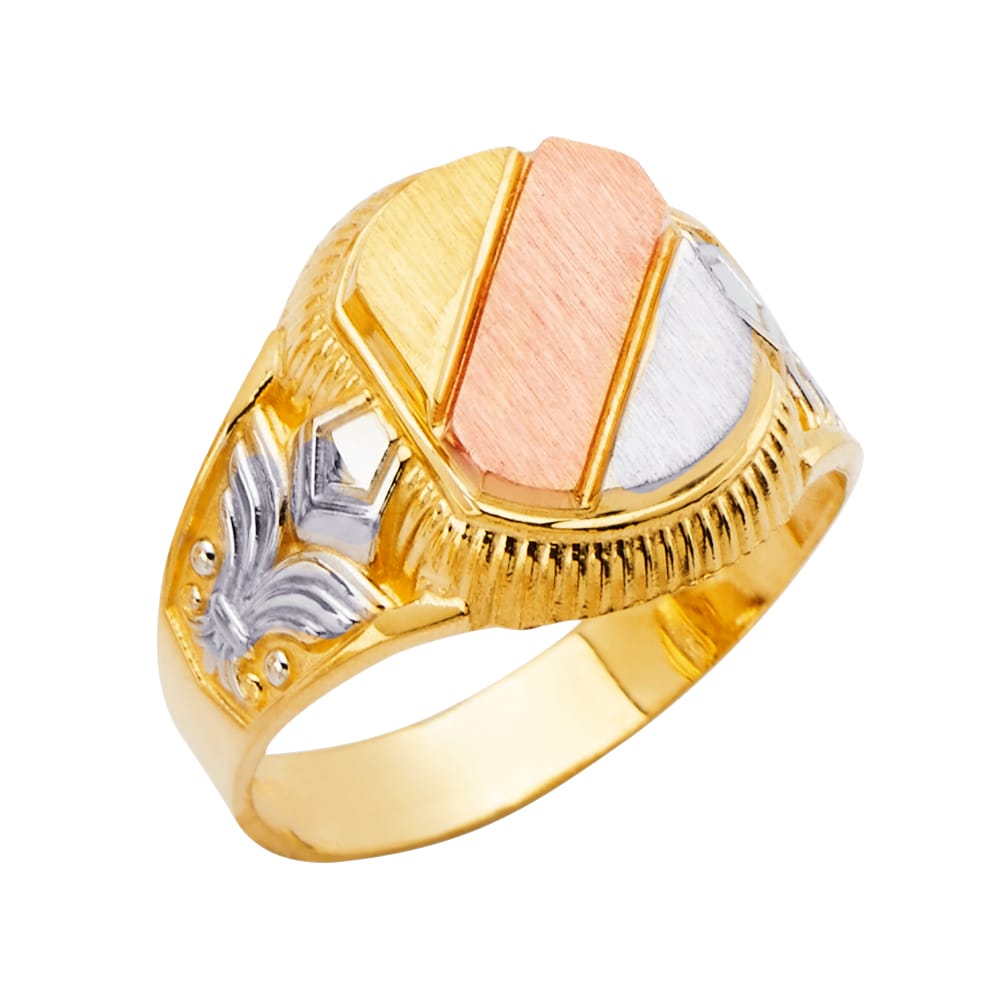
The variety of pinky rings available today is vast, offering something for every taste. For a classic, understated look, a simple minimalist band in gold, silver, or platinum is an excellent choice. This style is versatile and works well with both formal and casual attire. For those wanting to make a more direct statement about their heritage, an engraved signet ring with a family crest or personal monogram remains a timeless option.
If you prefer a bolder look, a ring with a gemstone can add a pop of color and personality. From a deep black onyx to a fiery ruby, the stone can reflect your personal taste or even your birthstone. The key is to choose a design that feels authentic to you and complements your overall aesthetic.
Dos and Don’ts of Wearing a Pinky Ring
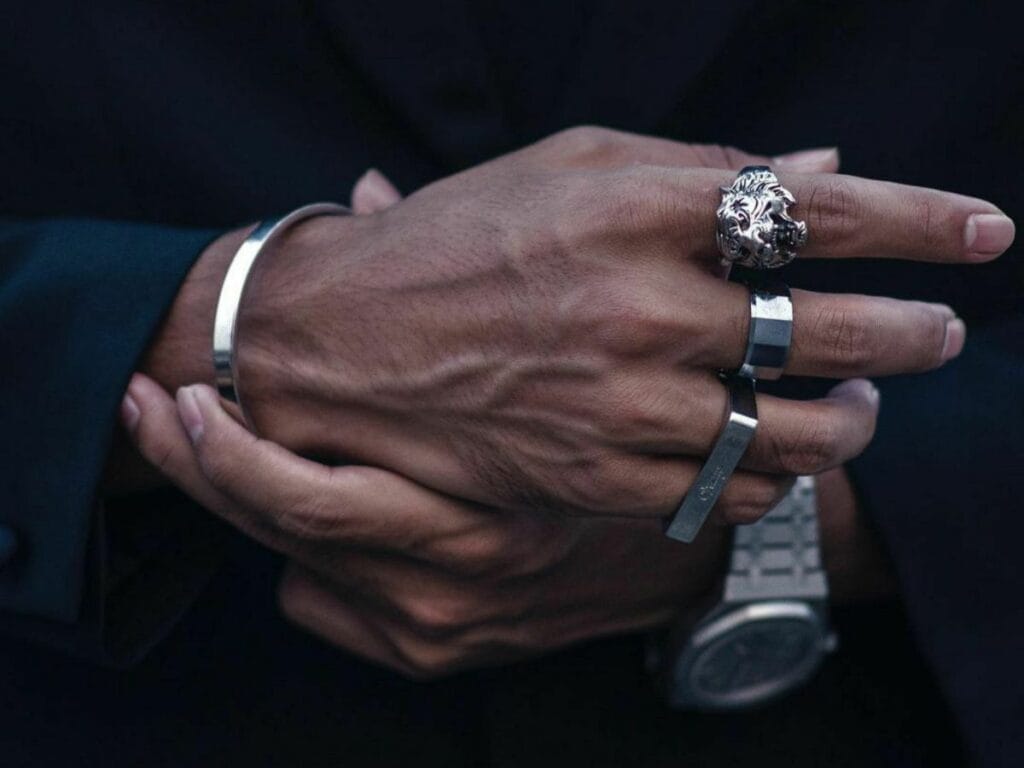
When styling a pinky ring, a few guidelines can help you wear it with poise. Do choose a ring that is proportional to the size of your hand; a massive ring on a slender hand can look overwhelming. Do let it be a singular statement on your hand, especially if it’s a bold design.
On the other hand, don’t overload one hand with too much jewelry. If your pinky ring is a statement piece, consider keeping other rings on that hand minimal or absent. Most importantly, don’t wear something that feels like a costume. The best accessory is one that feels like a natural extension of your personality.
Can a Straight Man Wear a Pinky Ring? (Spoiler: Yes!)
In some corners, outdated stereotypes have raised questions about the accessory. Let’s be unequivocally clear: Yes, a straight man can absolutely wear a pinky ring. Style has no sexual orientation. The meaning of this jewelry is rooted in history, status, family, profession, and personal fashion—none of which are tied to one’s identity in that way.
To think otherwise is to ignore centuries of tradition embraced by kings, presidents, business tycoons, and cultural icons. A pinky ring is a symbol of confidence and self-expression, available to any man who appreciates its history and style.
Balancing Your Ring with Other Jewelry
To create a cohesive and polished look, consider how your pinky ring interacts with your other accessories. A simple rule of thumb is to match metals. If you’re wearing a silver watch, a silver or platinum ring will create a harmonious look. Mixing metals can be done, but it requires a more deliberate and confident approach.
If your ring is ornate or features a large stone, it will naturally draw the eye. In this case, allow it to be the star of the show by pairing it with more subdued pieces, such as a simple wedding band or a classic watch. The goal is balance, ensuring your accessories complement each other rather than compete for attention.
With these considerations in mind, the pinky ring transforms from a historical artifact into a dynamic part of the modern man’s wardrobe.
Embracing the Power of the Pinky Ring
From the wax seals of Roman antiquity to the stages of modern music festivals, the man’s pinky ring has traveled through time, accumulating layers of meaning and style. It has served as a marker of immense wealth, a sacred link to family heritage, a badge of professional honor, and a bold declaration of personal flair. The enduring question of why do men wear pinky rings has no single answer, but rather a spectrum of compelling reasons that have shifted with the tides of history.
A Timeless Accessory for the Modern Man
Today, wearing a pinky ring is a nod to this rich history combined with a distinctly modern spirit of individualism. As jeweler Briony Raymond notes, “There’s something about having a ring on the pinky that lends one’s gestures and mannerisms a more intentional flair. It can embolden a man.” It is more than just an accessory; it is a choice. It’s a piece of wearable art that can symbolize a personal achievement, a connection to one’s roots, or simply a love for elegant design. Whether it’s a subtle band or a statement signet, the pinky ring remains one of the most personal and powerful pieces of jewelry a man can wear, a small but significant testament to his own unique story.
Rooted in Hawaiian tradition, 7 Day bracelets symbolize creation, love, and spiritual protection. Learn their meaning, how to wear them, and what makes them a powerful cultural statement.
he St. Joseph medal is more than a piece of jewelry — it’s a devotional emblem that reflects faith, responsibility, and quiet strength. Worn by fathers, workers, and the faithful…
The St. Christopher medal is more than a piece of jewelry — it’s a symbol of faith, courage, and divine protection. Learn the story behind this powerful emblem, its spiritual…
Discover why men are embracing rose gold in 2025. From rings to watches, learn how to style and care for this versatile metal. Break stereotypes with confidence!
Flores Jewelry
25310 Madison Ave, Murrieta, CA 92562
Monday 10am - 6pm Tus - Fri 9am - 7pm Sat - Sun 10am - 6pm
info@floresjewelry.online
+1 951-319-0562
Subscribe Now
Subscribe to our Email List to Receive Special Offers, Free Giveaways and More!